
Top 5 Civilian IR Illuminators (Laser Aiming Modules) in 2026: In-Depth Buyer’s Guide
If you own night vision and want to get the most out of it on a rifle, a quality infrared (IR) laser + illuminator combination is one of the highest-impact upgrades you can make. These devices (often called LAMs or MFALs) give you an aiming laser that only appears under night vision plus an IR illuminator that lights up the night for your NODs—without a visible beam to the naked eye.
This guide ranks the top five civilian-legal options currently available, ordered from lowest to highest approximate street price. We start with the excellent value Holosun IRIS-3 and work up to the current gold-standard premium units. All of these are eye-safe Class 1 (or equivalent) for the IR components, fully legal for civilian ownership in the United States (subject to normal ITAR rules for U.S. persons), and designed for Picatinny rails.
Quick Comparison Table
A side-by-side overview makes it easier to see the key differences at a glance before diving into the detailed reviews.
| Model | Approx. Price | Illuminator Type | Weight (approx.) | Key Strength | Best For |
|---|---|---|---|---|---|
| Holosun IRIS-3 | $899–$950 | 60 mW VCSEL | 6.4 oz | Best value / clean beam | First serious NV setup |
| Steiner DBAL-A3 | $1,500–$1,800 | Adjustable Laser | ~8 oz | Proven reliability | Balanced mid-range use |
| USNV Designate IR-V | $1,650–$2,000 | VCSEL | < 8 oz | Lightweight + USA-made | Weight-conscious builds |
| Steiner DBAL-D2 | $1,800–$2,000 | 600 mW LED | 8.6 oz | Max long-range power | Open terrain / hunting |
| B.E. Meyers MAWL-C1+ | $3,500–$3,650 | Class 1+ (advanced) | ~10 oz | Overall performance king | Serious / professional use |
1. Holosun IRIS-3 — Best Overall Value
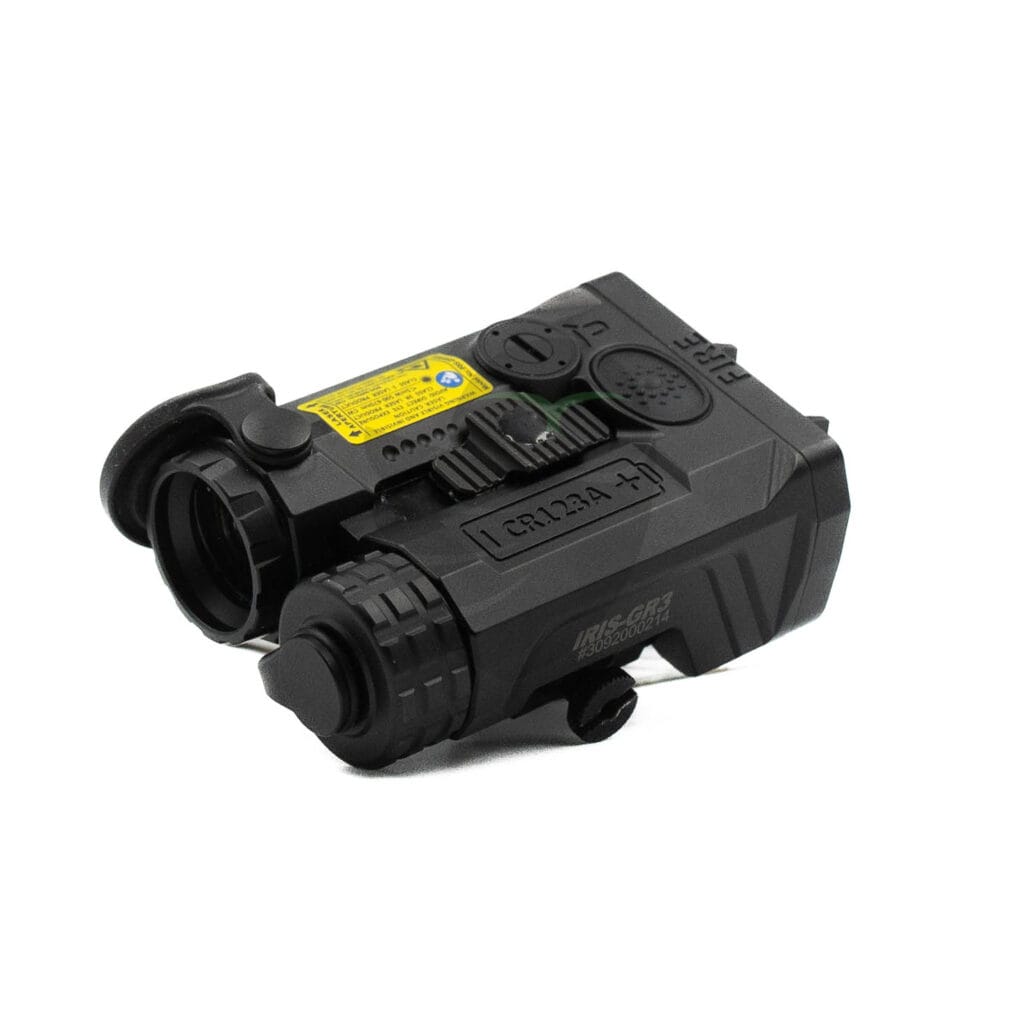
The Holosun IRIS-3 is a triple-function device that packs a visible laser (red or green options), an IR aiming laser, and a 60 mW VCSEL IR illuminator into a surprisingly compact and lightweight 7075-T6 aluminum housing. Holosun redesigned the body to sit lower and weigh about 43% less than their earlier laser modules. It features an ambidextrous center fire button, improved rear power/mode selectors, an adjustable illuminator beam (spot to flood), and comes with a dual-button remote switch that includes a visible-laser override.
Battery is a single CR123A. Weight is roughly 6.4 oz with battery. The VCSEL illuminator produces a clean, efficient beam that many users describe as “MAWL-like” at a fraction of the cost.
- Outstanding performance-to-price ratio
- Clean VCSEL illuminator with adjustable beam
- Very compact and lightweight
- Ambidextrous controls and good remote switch
- Visible + IR laser + illuminator in one unit
- Widely available and well-supported
- Illuminator power is solid but not the absolute strongest at extreme distances
- Build quality is excellent for the price but not quite at the level of the $3,000+ units
- Beam pattern on the illuminator is a bit tighter than some prefer for pure CQB work
2. Steiner DBAL-A3 (Civilian)
The civilian DBAL-A3 is Steiner’s commercial version of a military dual-beam aiming laser. It combines a green visible laser, a Class 1 IR laser pointer, and an adjustable (defocusable) IR laser illuminator. The visible and IR lasers are co-aligned, so zeroing the green laser in daylight automatically zeros the IR laser for night use. It offers dual activation switches, remote ports, and a quick-detach mount. Weight is typically around 8 oz.
This is a proven platform that has been refined over many years and remains popular for its reliability and relatively compact size.
- Co-aligned lasers make zeroing simple
- Adjustable IR illuminator works well for both close and mid-range
- Trusted Steiner build quality and durability
- Good remote switch options
- Proven track record in the civilian market
- Illuminator technology is older laser-based rather than modern VCSEL
- Slightly more expensive than the Holosun for comparable real-world performance in many scenarios
- Form factor is a bit bulkier than the newest compact designs
3. US Night Vision Designate IR-V
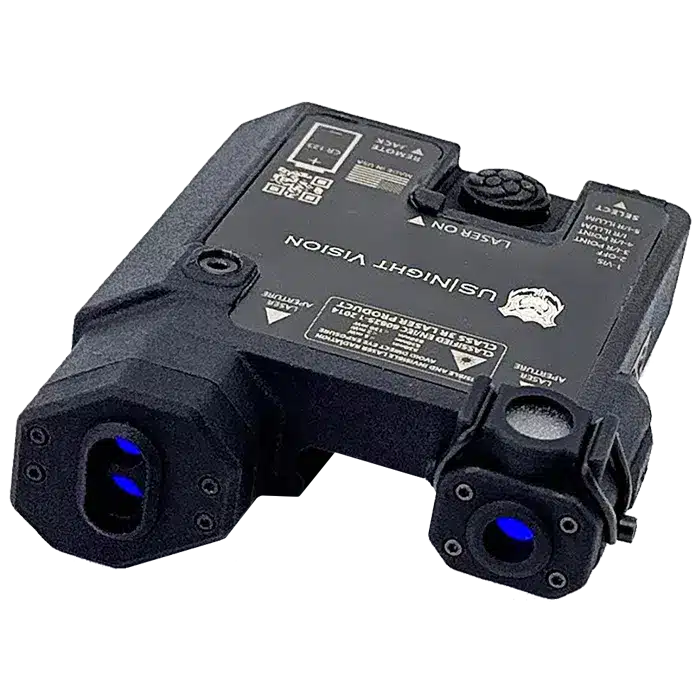
Made in the USA, the Designate IR-V is one of the lightest and most compact three-beam systems available. It features a green visible laser, IR laser, and a VCSEL IR illuminator. Controls are well thought out (often with an Arisaka-style ambidextrous fire button), it accepts standard Crane remote switches, and many packages include a CQB diffuser. Weight is typically under 8 oz with mount and battery.
It was designed specifically to give civilians high-end capability without the $3,000+ price tag of the top-tier military-derived units.
- Excellent VCSEL illuminator performance
- Very lightweight and low-profile
- USA-made with solid construction
- Good ergonomics and remote compatibility
- Often includes useful accessories like a diffuser
- Still relatively new compared with Steiner and B.E. Meyers track records
- Availability can fluctuate
- Price sits in a competitive mid-to-upper range where the Holosun offers more value for many users
4. Steiner DBAL-D2
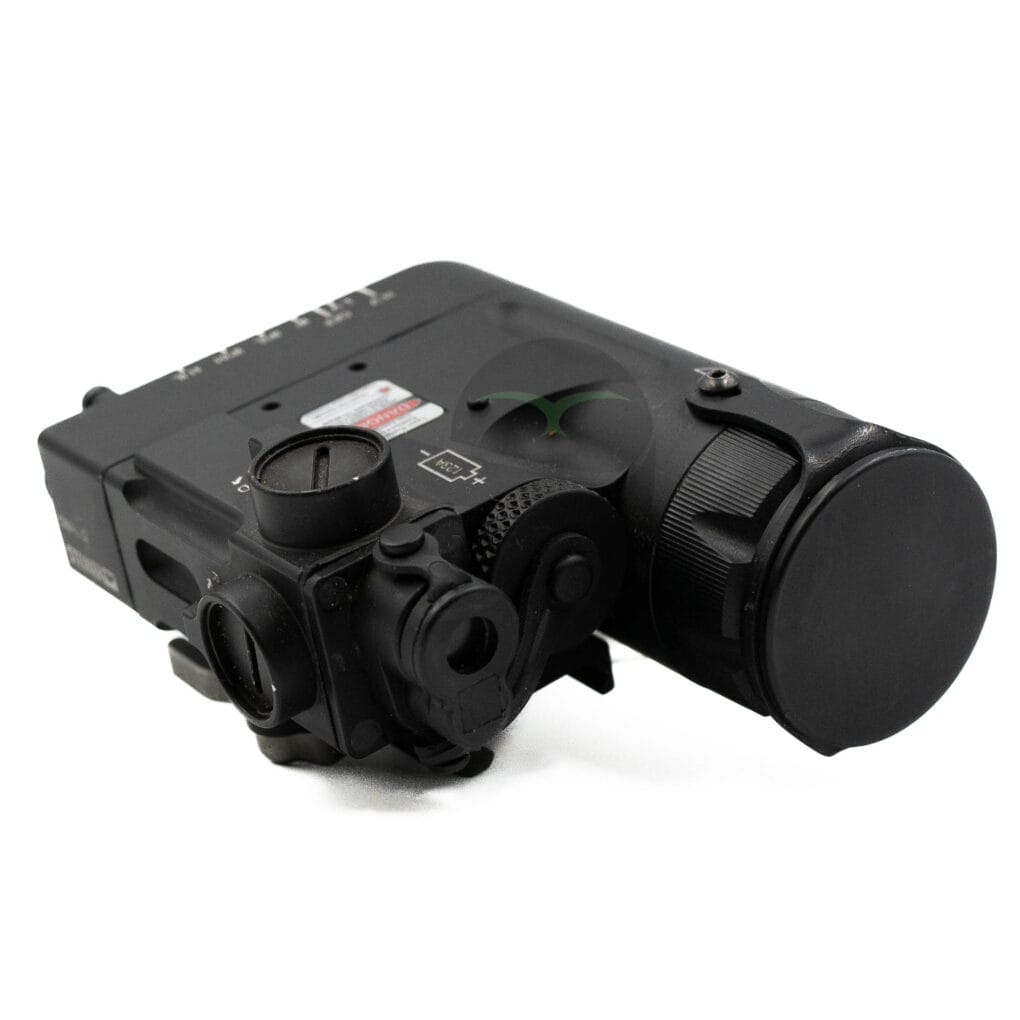
The DBAL-D2 stands out because of its powerful ~600 mW LED IR illuminator with a wide adjustable divergence (roughly 2° to 30°). Paired with a green visible laser and Class 1 IR laser pointer, this unit is particularly strong at longer ranges and for flooding larger areas. The lasers are co-aligned. It uses a single CR123A and features a quick-detach HT mount. Weight is about 8.6 oz.
Many experienced night-vision users still call the D2 one of the best pure illumination tools available to civilians because of the LED’s raw output and clean flood capability.
- Exceptionally powerful and adjustable LED illuminator
- Excellent for long-range identification and scanning open terrain
- Co-aligned lasers
- Rugged Steiner construction
- Strong reputation for holding zero
- Larger and heavier than modern VCSEL-focused designs
- LED beam quality is different from the tighter VCSEL patterns some prefer
- Not the most compact option for short carbines or weight-sensitive builds
5. B.E. Meyers MAWL-C1+
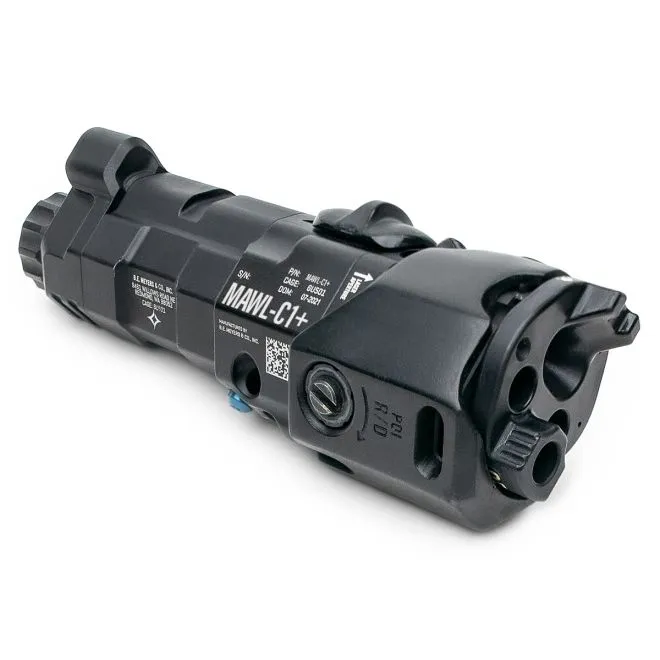
The MAWL-C1+ (Modular Advanced Weapon Laser – Class 1+) is widely regarded as the current civilian gold standard. It uses Class 1+ technology that delivers more effective IR illumination power than most other legal devices while remaining eye-safe. Features include preset short/mid/long range modes, outstanding beam clarity, fully ambidextrous modular design (swap the endcap and head for left-hand use), very low rail height, and intuitive controls. Weight is roughly 10 oz with battery.
It is expensive, but many professionals and serious civilian users consider it worth every dollar for its combination of performance, ergonomics, and reliability.
- Best overall IR performance and beam quality in the civilian market
- Excellent ergonomics and ambidextrous modularity
- Intuitive range-based modes
- Extremely rugged and well-engineered
- Low profile that plays well with other accessories
- Highest price on the list by a significant margin
- Heavier than the compact Holosun or Designate
- Overkill for many recreational or short-range users
Quick Buying Advice
- Best starting point / best value: Holosun IRIS-3
- Best long-range illumination: Steiner DBAL-D2
- Best overall premium performance: B.E. Meyers MAWL-C1+
- Best lightweight modern alternative: USNV Designate IR-V or Steiner DBAL-A3
Always buy from reputable dealers, confirm the unit is the civilian-legal version, and pair it with quality Gen 3 (or better) night vision for the best results. Battery life, zero retention under recoil, and switchology become very important once you start running the device hard.
Frequently Asked Questions
Are these IR illuminators legal for civilians to own?
Yes. All five units listed are specifically the civilian-legal (eye-safe Class 1 or Class 1+) versions. Full-power military IR lasers are restricted, but these commercial models are designed to comply with FDA eye-safety regulations while still delivering useful performance under night vision. They are generally ITAR-controlled, meaning they can only be sold to U.S. persons.
What is the difference between VCSEL and LED IR illuminators?
VCSEL (Vertical-Cavity Surface-Emitting Laser) illuminators produce a cleaner, more efficient, and often tighter beam with less wasted light and better power efficiency. LED illuminators (like the one on the DBAL-D2) can put out higher raw power and excel at wide flood patterns or longer-range “throw.” Both work well; preference usually comes down to the distances and environments you operate in.
Do I need an IR illuminator if I already have good night vision?
In complete darkness or under heavy tree canopy, even high-end Gen 3 tubes benefit dramatically from an IR illuminator. Ambient light is often insufficient for clear target identification at distance. An illuminator also helps when using lower-gain settings or when you need to positively identify something that is partially obscured.
Can the visible laser be seen by others at night?
The visible laser (usually green or red) is daylight-visible and will be obvious to anyone looking in your direction at night. The IR laser and IR illuminator are invisible to the naked eye and only appear through night-vision devices. Most users keep the visible laser for daytime zeroing and training and switch to IR under night vision.
How important is co-alignment of the lasers?
Very. Units with co-aligned visible and IR lasers (most modern designs) let you zero the visible laser in daylight and have the IR laser already zeroed for night use. This saves significant time and eliminates the need to zero under night vision, which is slower and less precise.
Will these work with any night vision device?
They work with virtually all analog Gen 2+/Gen 3 night vision and most digital night-vision systems that are sensitive to the 850 nm wavelength range these units use. Performance is best with high-quality white-phosphor or green-phosphor Gen 3 tubes.
Is the Holosun IRIS-3 durable enough for serious use?
Yes for the large majority of civilian users. It is built from 7075 aluminum, is IP67-rated, and has proven itself under recoil on AR-pattern rifles and similar platforms. While it is not quite at the same absolute durability level as a MAWL, real-world feedback has been strongly positive for training, hunting, and defensive use.
Should I buy the cheapest option or save for a premium unit?
If this is your first IR laser/illuminator and you are still building your night-vision setup, the Holosun IRIS-3 is an outstanding place to start. Many experienced users keep theirs even after trying more expensive options. If you already have high-end night vision and shoot regularly under NODs, the jump to a MAWL-C1+ (or similar premium unit) is noticeable and often worth the investment for serious users.
Prices and availability change frequently. Always verify the exact model is the current civilian version and purchase from authorized dealers. This article is for informational purposes only and does not constitute legal advice.