
EOTech OGL vs. Wilcox RAID XE
Weapon-mounted laser aiming modules (LAMs) remain essential for night-vision (NVG) operations, combining visible/IR lasers with adjustable illumination for fast target acquisition in low-light or no-light conditions. In the premium tier, the EOTech OGL (On-Gun Laser) and Wilcox RAID XE stand out as compact, rugged aluminum devices powered by a single CR123A battery. Both feature co-aligned lasers and advanced VCSEL illuminators, targeting military, law enforcement, and civilian night-vision enthusiasts.
This updated comparison draws from official specs, 2025–2026 YouTube tests, Reddit discussions (r/NightVision), and dealer data. It covers design, performance, ergonomics, pricing, and real-world use. Important note: Both offer full-power (MIL/LE-restricted, higher output) and civilian/low-power (eye-safe/Class 1 or 3R) variants. Full-power units require verification and are export-controlled.
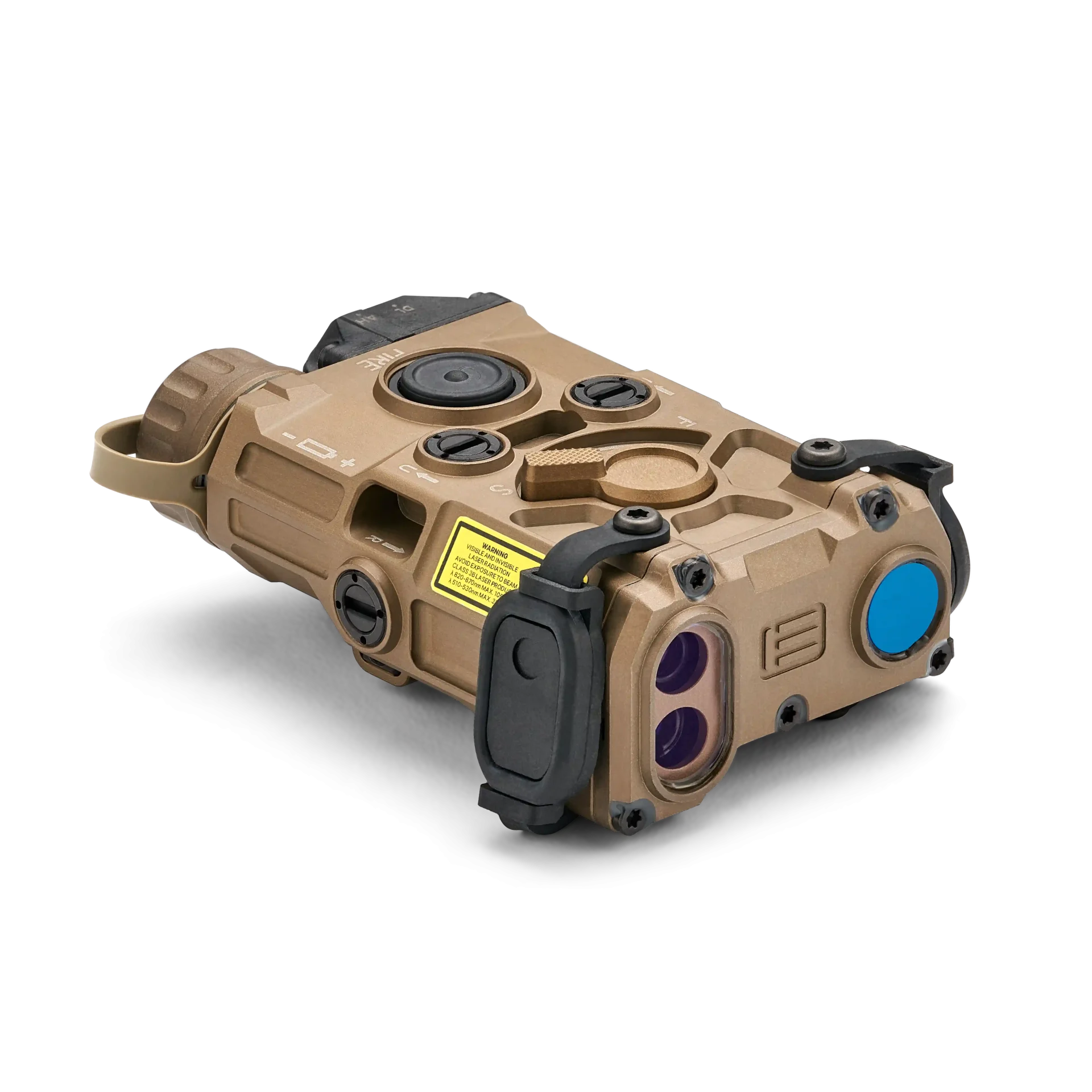
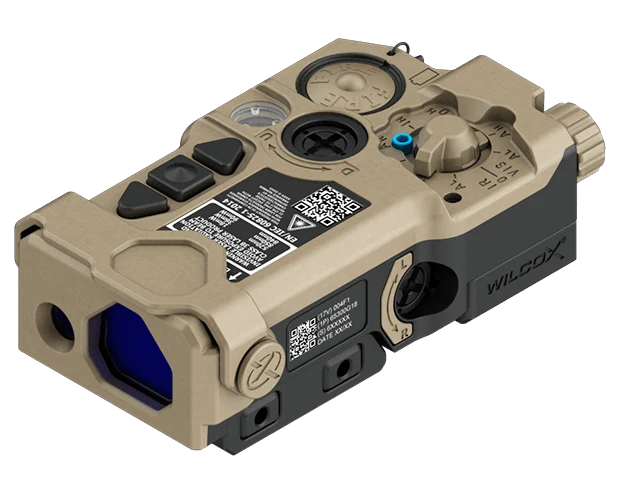
Background and Design Philosophy
EOTech OGL
EOTech (holographic sights specialists) launched the OGL in 2023, focusing on stress-proof ergonomics. Key innovations include a shared optical bench for green visible and IR lasers plus a patent-pending sliding lever for instant IR illuminator divergence adjustment. The all-aluminum body is deck-of-cards sized. In January 2026, EOTech released the OGL-C commercial variant for civilians, delivering eye-safe performance at a more accessible price.
Wilcox RAID XE
Wilcox (RAID/BOSS pioneers) introduced the XE in late 2022 as a refined next-gen LAM. It prioritizes beam quality and customization with a dual-illuminator system (adjustable VCSEL spot + fixed 40° “room” flood) and programmable multi-function keypads. A single optical bench simplifies zeroing. It’s praised for speckle-free output and modularity.
Both are 6061-T6 aluminum with MIL-SPEC anodizing—built for combat abuse.
Key Specifications Comparison
| Feature | EOTech OGL (Standard / OGL-C Commercial) | Wilcox RAID XE (High Power / Low Power) |
|---|---|---|
| Dimensions (L×W×H) | 4.1″ × 2.3″ × 1.5″ | ~3.78″ × 2.15″ × compact footprint |
| Weight (with battery) | 8 oz | 5.4–10.1 oz (low-power lighter) |
| Battery | 1× CR123A (up to 9 hours) | 1× CR123A (over 8 hours) |
| Visible Laser | Green (Standard: ~30 mW; OGL-C: 0.5 mW @ 515 nm) | Red/Green options (High: up to 75 mW/15 mW; Low: 3 mW) |
| IR Aiming Laser | NIR (Standard high output; OGL-C: ~0.7 mW @ 850 nm) | NIR (High: 30 mW; Low: 3.5 mW @ 850 nm) |
| IR Illuminator | VCSEL, adjustable ~5–115 mrad (sliding lever) | VCSEL adjustable spot + fixed 40° room flood (25–50 mW) |
| Adjustments | 0.2 mrad W/E, shared bench | Single W/E bench; programmable modes |
| Controls | Sliding lever (illuminator), mode selector, Crane port (Modlite switch included) | Multi-function keypads (custom pulse/modes); proprietary remote |
| Mount | QD Picatinny (return-to-zero) | MIL-STD-1913 Picatinny |
| Other | Tethered caps; OGL-C eye-safe for civilians | User-swappable visor; OLED programming |
Both leverage VCSEL tech for cleaner, uniform beams versus older LED illuminators.
Ergonomics and Controls: Speed vs. Customization
This is the biggest divide:
- OGL Wins Ergonomics: The top-mounted sliding lever lets you instantly switch divergence (tight spot for distance → wide flood for CQB) one-handed, eyes-up. Operators call it “revolutionary” under stress. Standard Crane remote compatibility and included Modlite ModButton Lite add plug-and-play ease. Recent hands-on reports praise smooth buttons and intuitive layout.
- RAID XE Wins Versatility: Programmable keypads allow custom laser modes, power levels, and overrides via an OLED screen. Dual illuminators shine in mixed-distance scenarios—the dedicated 40° flood is a “game-changer” indoors. Drawback: the proprietary remote/tape switch draws consistent criticism as “the worst on the market”; many users swap it for aftermarket adapters.
Consensus from forums/YouTube: OGL for intuitive speed; RAID XE for set-and-forget customization if you invest setup time.
Performance: Beam Quality, Range, and Durability
- Beam & Illumination: Both deliver low-speckle VCSEL output. RAID XE often edges out with superior flood uniformity and tighter minimum divergence in tests. OGL’s lever enables faster real-time tweaks; its illuminator is “clean and powerful” but some note minor artifacts at extreme tight settings versus RAID.
- Output & Range: Full-power models rival top LAMs (MAWL/NGAL). Civilian OGL-C and RAID XE Low Power remain highly effective for practical NVG distances while staying eye-safe.
- Zero Retention & Ruggedness: Both hold zero under heavy recoil. Aluminum housings pass drop/impact tests. Early OGL units (2023–2024) had QC reports (defects sent back), but 2026 feedback shows improvement. RAID XE earns praise for proven reliability.
- Side-by-Side Tests: 2025–2026 videos (e.g., Custom Night Vision comparisons) show RAID XE excelling in beam clarity at range; OGL matches in usability and often wins for CQB speed. Neither includes white light—pure laser/illum focus.
Environmental: Both rated for extremes (-40°F to +149°F) and waterproof (1m submersion).
Pros and Cons
EOTech OGL / OGL-C
- Outstanding lever ergonomics for quick adjustments under stress
- Compact and lightweight design
- Modlite switch included for easy integration
- Competitive pricing, especially the new OGL-C civilian version
- Shared optical bench for simple zeroing
- Early production QC issues (largely resolved in 2026 models)
- No dedicated room flood illuminator
- Full-power variant restricted to MIL/LE
Wilcox RAID XE
- Exceptional beam uniformity + dual illuminators
- Highly programmable with custom modes
- Proven durability across generations
- Dedicated 40° room flood excels in CQB
- Proprietary switch draws frequent criticism (many users replace it)
- Steeper learning curve for keypads
- Higher price in some configurations
Real-World User Feedback (2025–2026)
Reddit’s r/NightVision and AR15.com threads show polarized but informed opinions:
- Many RAID XE owners call it “king of LAMs” for reliability and flood performance; some prefer it over MAWL/NGAL.
- OGL fans rave about the lever and green visible laser but note some sold units due to initial defects or preferring RAID ecosystem. “OGL is the superior version of the RAID with far better controls” vs. “All my friends who bought OGLs hated them.”
- Civilian OGL-C is generating buzz as a “slept-on” value option now that it’s shipping.
Both crush older PEQ-15s in modern VCSEL performance.
Which Should You Choose?
- Choose OGL (or OGL-C) if: You want lightning-fast adjustments under stress, a lighter package, green visible laser, or best civilian value in 2026. Perfect for duty rifles or quick CQB NVG builds.
- Choose RAID XE if: You prioritize beam quality, dual-illuminator versatility, programmability, or already use Wilcox remotes. Ideal for operators fine-tuning mixed-distance setups.
- Civilian Pick: OGL-C now edges out for price/features/accessibility; RAID XE Low Power if you want proven flood performance.
- Alternatives: Holosun IRIS or L3Harris NGAL for different trade-offs.
Both are elite LAMs that transform NVG shooting. Hands-on testing at a dealer is ideal—“feel” is personal. Check EOTech or Wilcox authorized sellers for current stock and verification requirements.
Frequently Asked Questions
Which is better for civilians in 2026?
The EOTech OGL-C is generally the better civilian choice due to its lower price, intuitive lever controls, and recent improvements. The RAID XE Low Power is still excellent if you specifically need the dual-illuminator setup and don’t mind the proprietary switch.
Are full-power versions legal for civilians?
No. Full-power (high-output) variants of both the OGL and RAID XE are restricted to military/law enforcement with proper verification. Civilians are limited to the eye-safe OGL-C or RAID XE Low Power versions, which still perform very well under NVGs for most practical distances.
How do the illuminators compare in CQB vs. longer ranges?
RAID XE’s fixed 40° room flood gives it a clear edge for fast indoor/close-quarters target ID. OGL’s sliding lever lets you adjust divergence faster in dynamic situations, making it more versatile when you need to switch between spot and flood on the fly.
Is the RAID XE’s programmable keypad worth the extra effort?
It is if you like deep customization (pulse rates, power levels, overrides). Most users who take the time to program it love the flexibility; beginners often find the OGL’s simpler lever more “grab-and-go.”
Do either have reported reliability issues?
Early OGL units (2023–2024) had some QC complaints that have largely been fixed in 2025–2026 production. RAID XE has a stronger track record for “set it and forget it” reliability. Both are rugged aluminum units that hold zero under heavy use.
Battery life and maintenance—any differences?
Virtually identical—both run 8–9 hours on a CR123A under mixed use. No major maintenance differences; both use tethered caps and are submersible.
Prices and availability change frequently. Always verify current specifications, legal status, and pricing from authorized dealers. This article is for informational purposes only and does not constitute legal advice.