
Best Pistol Red Dot Sights of 2026
Pistol-mounted red dot sights (MRDS or mini red dots) have revolutionized handgun shooting over the past decade. They deliver lightning-fast target acquisition, superior accuracy under stress, and reliable performance at extended distances compared to traditional iron sights.
As of 2026, the market remains divided between open-emitter designs (exposed LED, single lens, lightweight and slim) and enclosed-emitter designs (fully sealed housing with front and rear lenses for maximum protection). Open emitters excel in speed, concealment, and affordability for competition and everyday carry, while enclosed emitters dominate for bombproof reliability in harsh, dirty, or wet conditions—ideal for duty, law enforcement, military, or extreme environments.
Best Pistol Red Dots in 2026 (Quick Picks)
If you want the top options without reading the full guide, these are the most trusted pistol red dots for durability, reliability, and performance in 2026.
| Category | Optic | Why It’s Great | Best For | Check Price |
|---|---|---|---|---|
| Best Overall | Trijicon RMR Type 2 | Legendary durability, combat-proven reliability, massive aftermarket | Carry / Duty / Competition | Price |
| Best Enclosed | Aimpoint ACRO P-2 | Fully sealed emitter, extreme durability, 50,000-hour battery | Duty / Harsh Environments | Price |
| Best Value | Holosun 507C X2 | Solar failsafe, multi-reticle system, excellent price-to-performance | Carry / Range | Price |
| Best Competition | Trijicon SRO | Massive window for extremely fast dot acquisition | Competition Shooting | Price |
| Best Compact Enclosed | Holosun EPS Carry | Compact enclosed design ideal for micro-compact pistols | Concealed Carry | Price |
Key Specs & Features Comparison
A clear look at the practical differences between open-emitter and enclosed-emitter designs.
| Aspect | Open-Emitter | Enclosed-Emitter | Winner |
|---|---|---|---|
| Size & Weight | Lighter (1–1.8 oz) | Heavier (1.8–2.8+ oz) | Open |
| Field of View | Wider, more natural view | Slightly narrower but intuitive | Open |
| Durability | Strong but exposed emitter | Fully sealed against debris | Enclosed |
| Environmental Resistance | Vulnerable to rain/mud | Excellent protection | Enclosed |
| Maintenance | Emitter may need cleaning | Clean outer lenses only | Enclosed |
| Cost | $150–$550 | $300–$800+ | Open |
| Battery Life | 10k–50k hours | Similar | Tie |
| Dot Acquisition | Very fast once trained | Beginner-friendly housing | Depends |
1. Trijicon RMR Type 2 — Best Overall
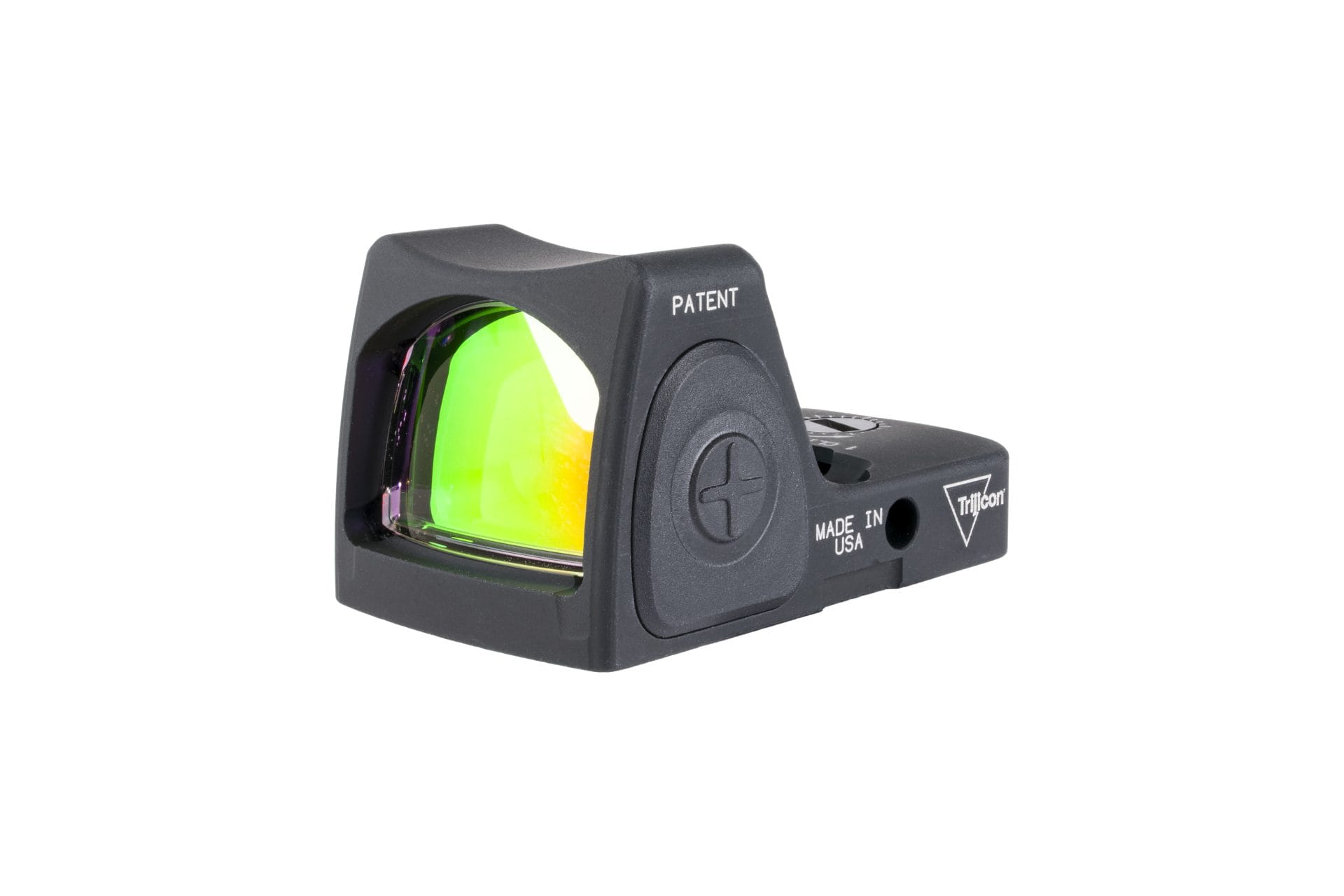
- Type: Open Emitter
- Weight: ~1.2 oz
- Dot Size: 1.0 / 3.25 / 6.5 MOA options
- Battery: CR2032
- Footprint: RMR
The Trijicon RMR Type 2 remains the gold-standard open-emitter optic. It offers legendary durability, combat-proven reliability, and the largest aftermarket support of any pistol red dot. It continues to be the top choice for carry, duty, and competition use.
- Combat-proven extreme durability
- Massive aftermarket and mounting options
- Excellent battery life and reliability
- Trusted by military and law enforcement
- Open emitter can collect debris
- Premium price
2. Aimpoint ACRO P-2 — Best Enclosed Emitter
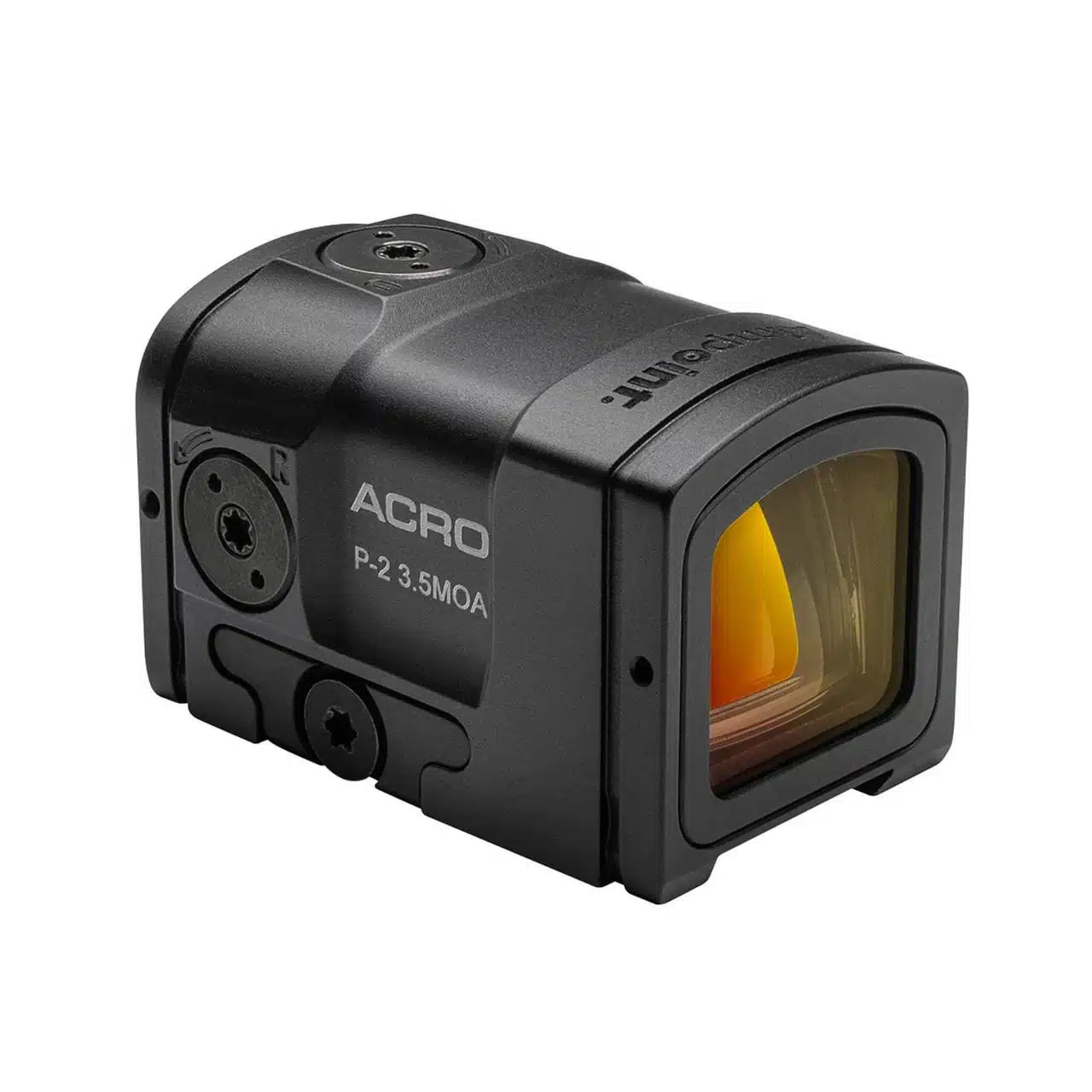
- Type: Enclosed Emitter
- Weight: 2.2 oz
- Dot Size: 2.5 / 3.5 MOA
- Battery Life: 50,000 hours
- Footprint: ACRO
The Aimpoint ACRO P-2 is a fully sealed enclosed-emitter optic built for the harshest conditions. With a 50,000-hour battery life and exceptional durability, it is the preferred choice for duty and extreme-environment use.
- Fully sealed against rain, mud, and debris
- Extremely long battery life
- Outstanding durability
- Ideal for professional/duty applications
- Heavier and bulkier than open emitters
- Higher cost
3. Holosun 507C X2 — Best Value
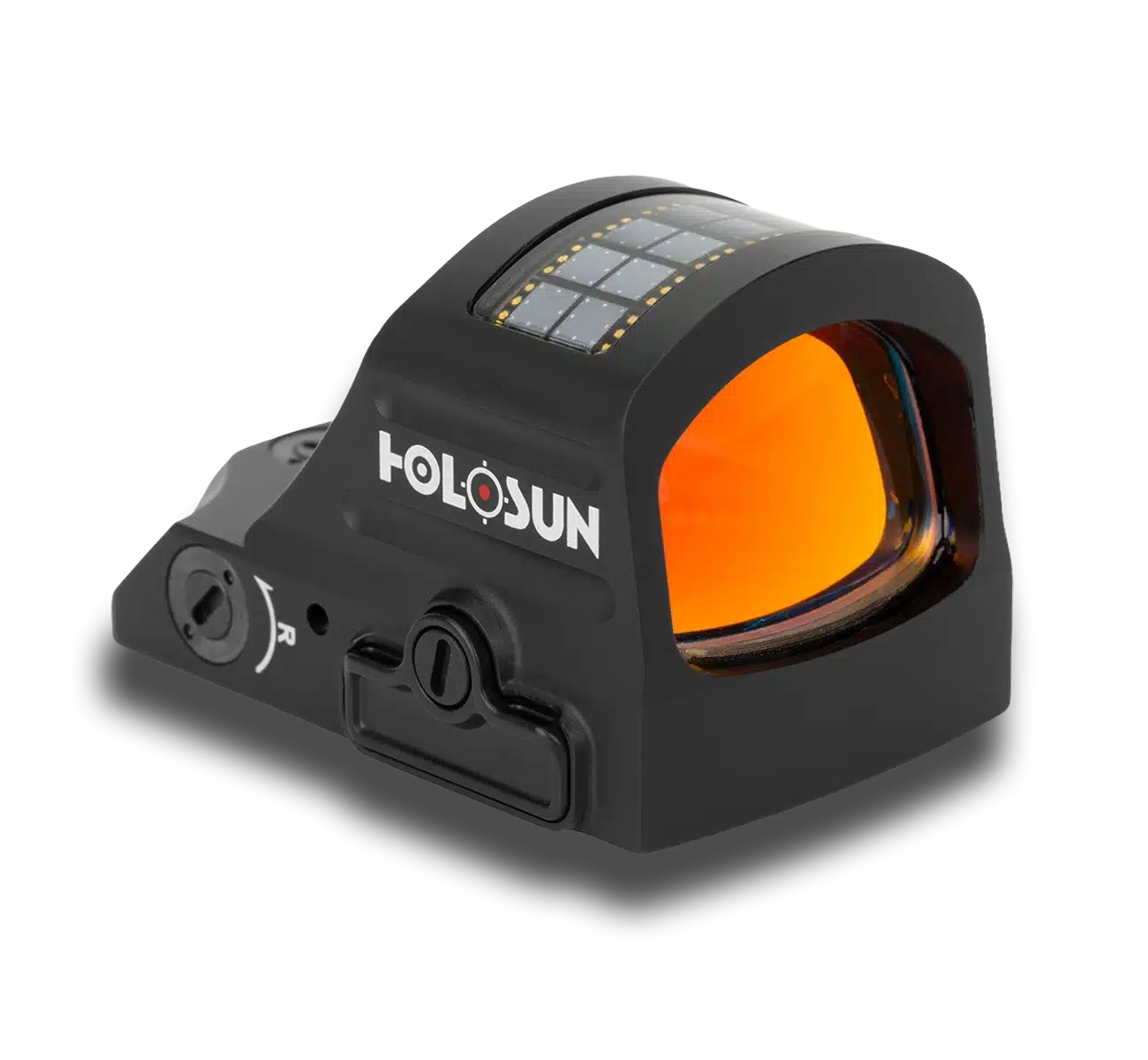
- Type: Open Emitter
- Weight: ~1.5 oz
- Reticle: Multi-Reticle System
- Battery: CR1632 + Solar
- Footprint: RMR
The Holosun 507C X2 delivers excellent performance at a competitive price. It features a solar failsafe, multi-reticle system, and strong overall build quality, making it one of the best value open-emitter options for carry and range use.
- Solar failsafe + long battery life
- Multi-reticle system
- Excellent price-to-performance ratio
- Lightweight and versatile
- Not as battle-proven as Trijicon
- Open emitter design
4. Trijicon SRO — Best Competition
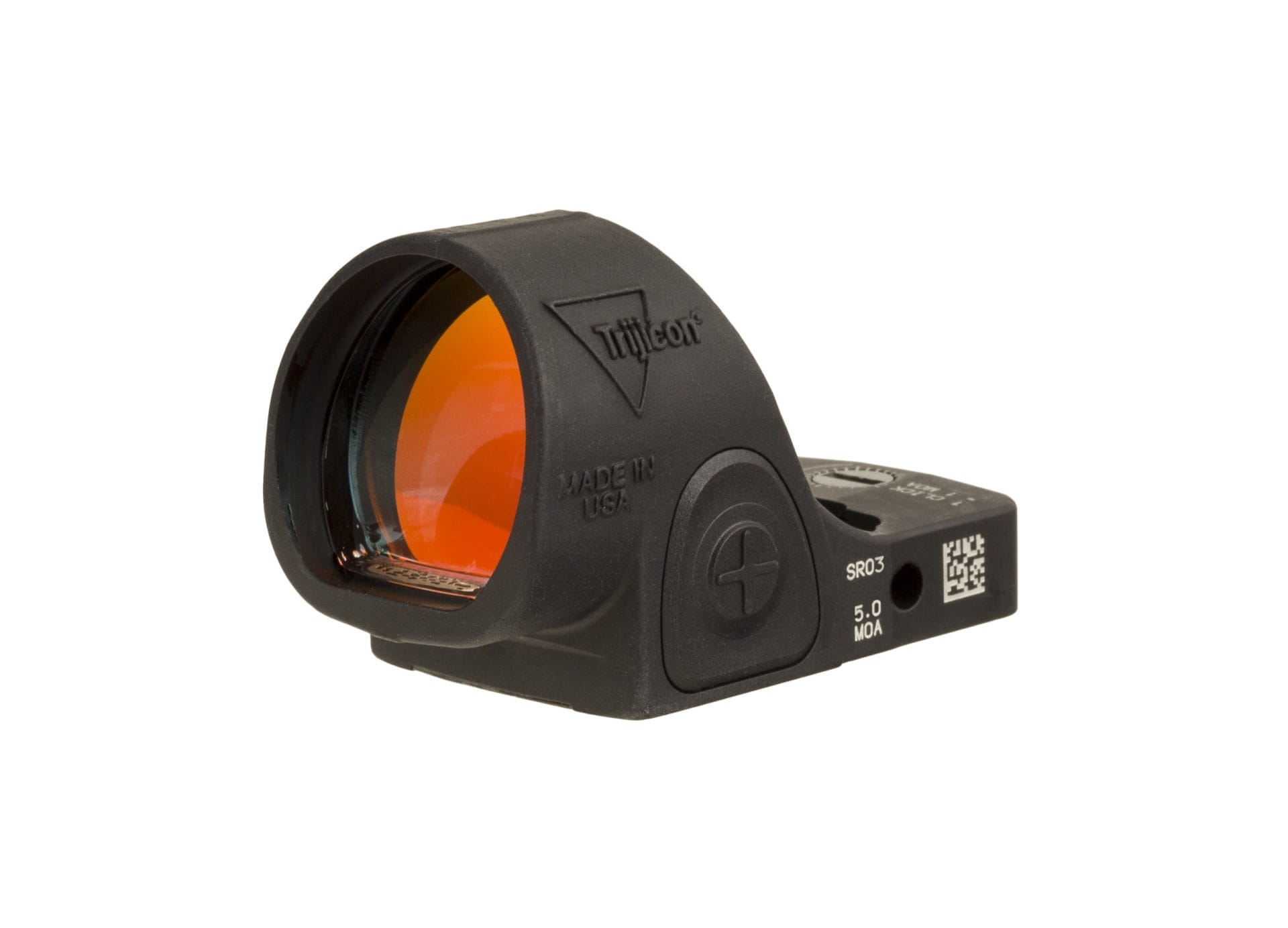
- Type: Open Emitter
- Weight: 1.6 oz
- Window: Large competition window
- Battery: CR2032 (top-load)
- Footprint: RMR
The Trijicon SRO features a large viewing window designed for extremely fast dot acquisition. It is the preferred optic for many competition shooters who prioritize speed and a wide field of view.
- Massive window for rapid target acquisition
- Excellent glass clarity
- Fast transitions in competition
- Trusted Trijicon durability
- Larger profile less ideal for deep concealment
- Open emitter
5. Holosun EPS Carry — Best Compact Enclosed
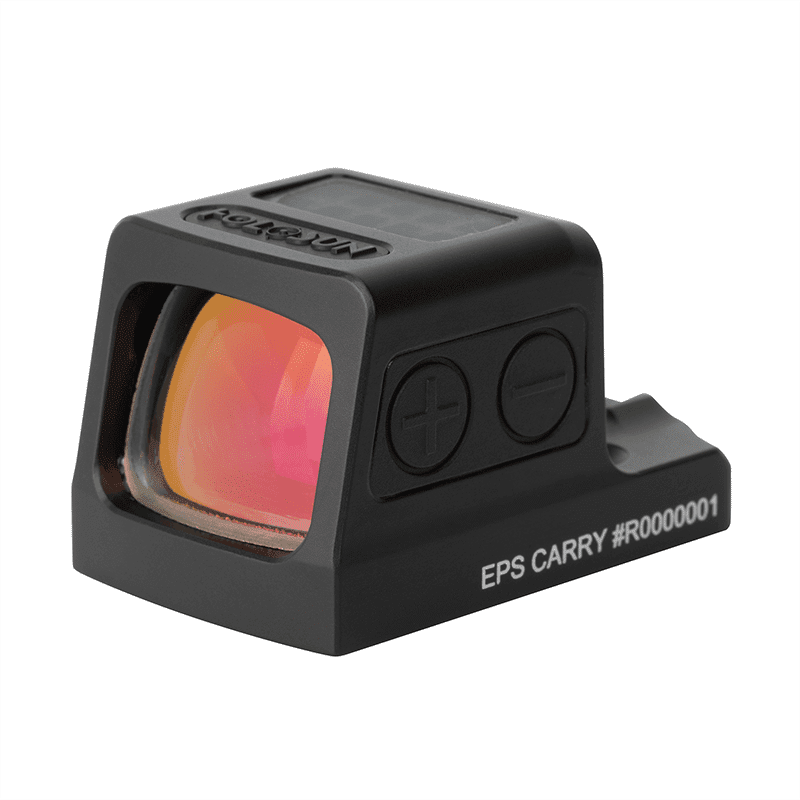
- Type: Enclosed Emitter
- Weight: ~1 oz
- Window: Compact enclosed
- Battery: CR1620 + Solar
- Footprint: K-series / RMSc adapter
The Holosun EPS Carry brings enclosed-emitter protection to a compact package specifically designed for micro-compact pistols. It offers excellent protection from lint, dust, and moisture while remaining suitable for everyday concealed carry.
- Fully enclosed in a compact size
- Ideal for micro-compact pistols
- Good protection from debris and moisture
- Strong value for an enclosed optic
- Slightly heavier than open micro optics
- Window is smaller than full-size enclosed models
Build Quality & Components
Open emitters use a single partially reflective lens with an exposed LED to keep the optic compact and lightweight. Most are machined from 7075 aluminum with hard-coat anodizing. Enclosed emitters add a second lens and protective housing that fully seals the optical system from debris.
Both designs use premium AR-coated glass for clarity. Modern optics commonly include motion activation (Shake Awake), multi-reticle systems, and convenient side-loading batteries.
Standout Feature — Enclosed Reliability vs Open Speed
Enclosed emitters provide unmatched reliability because debris cannot block the emitter. Rain, mud, lint, and dust simply cannot interfere with the dot—making them extremely attractive for duty or harsh-environment use.
Open emitters remain popular for speed. Their wider viewing window offers better peripheral awareness and faster target transitions, which is why they continue to dominate competition and many concealed-carry setups.
Accuracy & Performance
Both optic types deliver parallax-free aiming and crisp dots typically between 2–6.5 MOA. Open emitters sometimes offer slightly clearer glass due to fewer lenses, while enclosed optics maintain visibility even in rain or debris. Modern pistol red dots are extremely durable and capable of handling thousands of rounds without losing zero.
Installation & Real-World Durability
Installation requires selecting the correct mounting footprint and torquing the optic to manufacturer specifications. The RMR footprint remains the most common for open emitters, while ACRO and RMSc footprints are widely used for enclosed optics. Suppressor-height backup iron sights are strongly recommended.
Final Verdict
There is no single “best” optic type. Open emitters remain the most popular choice for concealed carry and competition due to their lighter weight and wider windows. Enclosed emitters excel in harsh environments where reliability is the top priority.
Bottom line: Choose open emitters for speed and concealability. Choose enclosed emitters for maximum durability and environmental protection.
Frequently Asked Questions
Which is better for concealed carry?
Open-emitter optics are typically lighter and slimmer, making them very popular for concealed carry. However, compact enclosed optics like the Holosun EPS Carry are quickly gaining popularity because they offer better protection from lint, dust, and moisture.
Do enclosed emitters perform better in rain?
Yes. Enclosed-emitter optics have a sealed design that protects the LED emitter from rain, snow, mud, and debris. This helps ensure the reticle remains visible even in harsh weather conditions.
Is the Trijicon RMR still the gold standard?
Yes. The Trijicon RMR remains one of the most trusted pistol red-dot sights ever produced. It has an outstanding reputation for durability and reliability, which is why it is still widely used by military, law enforcement, and serious shooters.
What pistol optic trends are emerging in 2026?
Enclosed-emitter pistol optics are becoming increasingly popular, especially for duty and professional use. However, open-emitter optics still dominate competition shooting and many concealed-carry applications due to their lighter weight and lower profile.
Prices and availability change frequently. Always verify current specifications and purchase from authorized dealers. This article is for informational purposes only and does not constitute legal advice.